For the customer, a return looks simple. Send the item back and receive the refund.
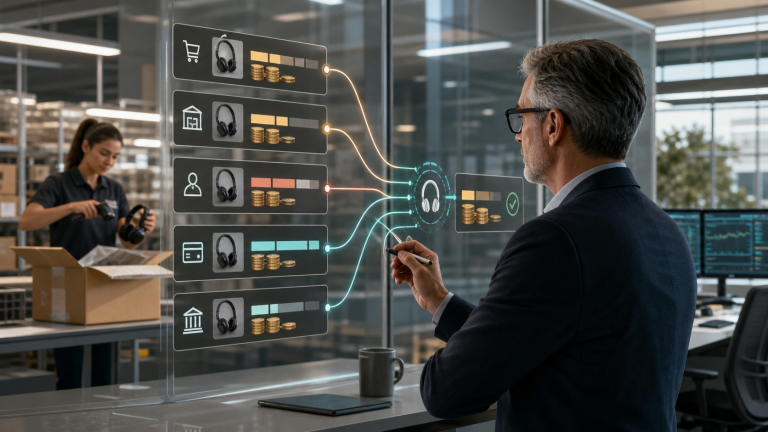
Inside a retailer, the same transaction may pass through the e-commerce platform, POS, warehouse or 3PL, inventory, ERP and payment systems. The process slows down when those systems do not agree on what has already happened.
A return may be marked as received in the warehouse while finance still waits for confirmation. A store may accept an online return while the original order remains unchanged. An item may pass inspection while inventory still shows it as unavailable.
A retail return becomes slow when the systems handling it disagree about its current state.
One return can have several operational states
A typical return may move through the following stages:
Initiated → Authorized → Received → Inspected → Disposition Decided → Refund Approved → Refunded → Reconciled
Different systems can own different stages. The order system may determine eligibility, the store or WMS confirms receipt, inspection determines condition, and the ERP or payment system records the refund.
The first decision in retail returns process automation is therefore not which technology to use. It is which system can reliably confirm each stage of the return.
Delays usually happen between systems
Most delays accumulate at the handoffs.
If the warehouse confirms receipt but finance still needs an email or spreadsheet before releasing the refund, the manual check is compensating for an unreliable exchange of information.
A stronger workflow uses verified business events.
For example, when the WMS confirms that a return has been received and passed inspection, that event can trigger the next actions automatically: update inventory, confirm refund eligibility, initiate the financial workflow and update the customer-facing status.
A faster return portal alone cannot create a faster refund if the backend process remains manual.
Standard returns and exceptions need different paths
Rule-based stages can often be automated, including eligibility checks, item-to-order matching, status synchronization, refund triggers, inventory updates and customer notifications.
Cases that require judgment should remain with people. These may include damaged goods, mismatched SKUs, policy exceptions or unclear inspection results.
The important difference is that an exception should reach the responsible person together with the current return state, relevant evidence and the decision required.
Otherwise, automation simply moves the manual investigation somewhere else.
Measure where the time is lost
Overall refund time is useful, but it does not identify the bottleneck.
Retailers should also measure transitions such as:
Received → Inspected
Inspected → Refund Approved
Refund Approved → Refund Executed
These can be tracked alongside manual intervention rate, reconciliation discrepancies, restock time and return-related customer contacts.
This shows where automation can create measurable operational improvement.
How DigiTech Consult approaches returns automation
DigiTech Consult maps the return journey across the systems already in use, identifies which system owns each stage, and defines the standard and exception paths.
The implementation may combine system integration, process orchestration, RPA, document processing and customer service automation where each is appropriate.
The goal is not to replace the retailer’s core platforms. It is to make the handoffs between them reliable enough for standard returns to move automatically while exceptions remain visible and controlled.